
The subsequent fundamental development was a tubular cell (developed together with Fraunhofer), which was already significantly simpler in ceramic terms (Cell Generation 2).
New-Generation of Solid-State-Electrolyte Stationary Batteries
CeraSalt is the world’s only company that offers a factory-ready, industrial implementation standard for solid-state-electrolyte sodium-metal-chloride (SMC), namely sodium-nickel-iron-chloride (NaNiFeCl) cell chemistry based on the company’s own most advanced cell generation (Generation 4), and that manufactures such cells.
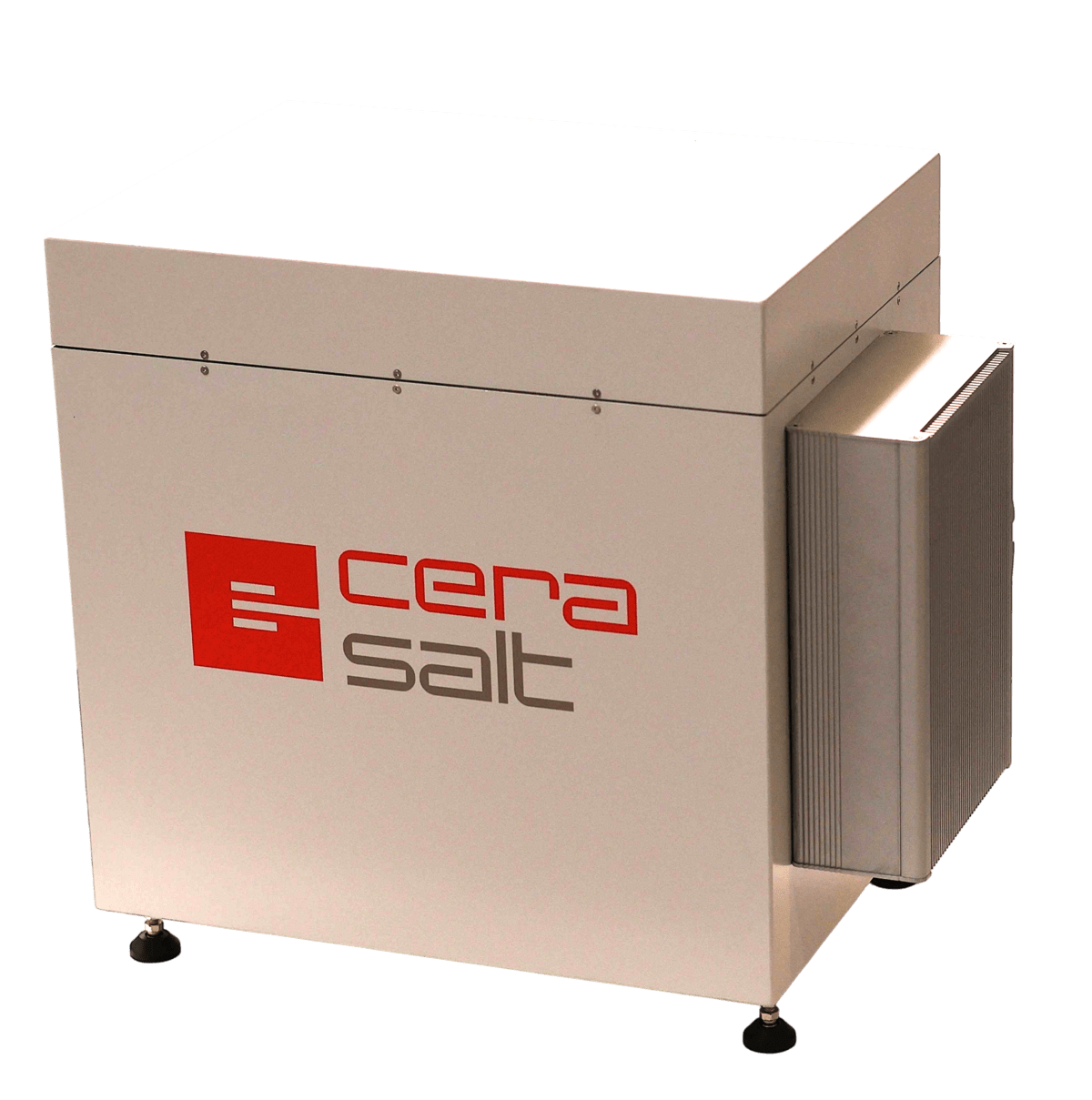
CeraSalt – Overview
SMC batteries have significant advantages compared with other battery technologies. As a result, there are numerous market segments—and therefore companies—that show great interest in collaborating with CeraSalt. Current discussion partners (future customers, technology partners, distribution partners) include, for example, one of the world’s top 10 construction companies, as well as global market leaders in offshore construction, explosion-protected construction, and equipment for gas compressor stations.
In all of these applications, traditional energy storage solutions such as lead-acid batteries, nickel-cadmium batteries, or diesel generators are still used today—accepting their respective disadvantages. What all these applications have in common is that lithium-ion batteries are not suitable due to safety requirements, environmental conditions, and similar constraints.
Thanks to the preparatory work of recent years, CeraSalt is now in a position to develop concrete application solutions together with customers and expects dynamic growth in the coming years.
CeraSalt is a subsidiary of Alumina Systems GmbH in Redwitz (Bavaria). Alumina Systems is a specialist in technical ceramics with a focus on highly demanding ceramic-metal composite components for a wide range of high-tech applications. Building on this core know-how, Alumina has been pursuing a battery project since 2016 with two objectives:
1. Optimization of the historical ceramic design of the SMC battery cell (Cell Generation 4), and
2. Development and establishment of an industrial series production for SMC batteries.
As may be known, around eight years ago the European Union launched funding programs to establish European battery production as part of two IPCEI programs (Important Project of Common European Interest). Driven by automotive manufacturers, the goal was to build battery factories throughout Europe in order to create independence for Europe in this strategically important key industry (“European Battery Alliance”). The automotive manufacturers work on the basis of lithium-ion technology.
Alumina Systems was given the opportunity to participate in this funding program; however, it was the only company at the time that pursued batteries for stationary applications—and based on a completely different cell chemistry (SMC). Moreover, Alumina Systems was one of the few participants in the program that did not merely plan module assembly but set out to establish a complete in-house cell production in Germany. This holistic approach was regarded by the EU as particularly interesting and worthy of support.
Alumina Systems received a funding approval totaling EUR 8.7 million, paid by the German federal government and the State of Bavaria. As an independent business unit, this project is operated under the brand name “CeraSalt.”
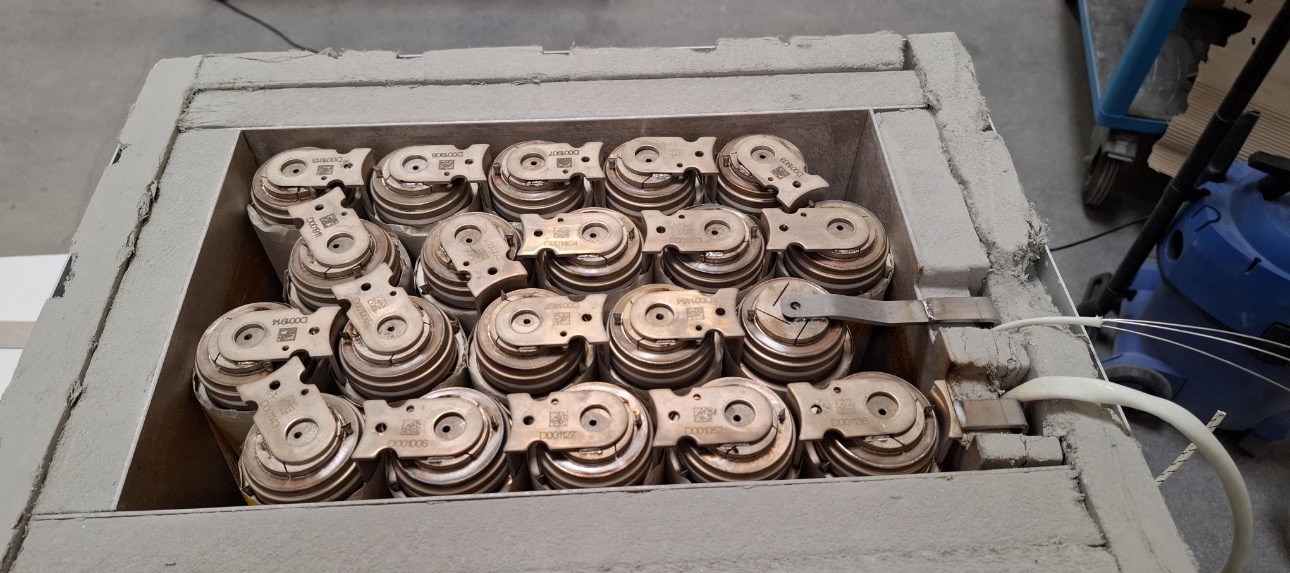
What Have We Done Over the Past 5 Years?
The SMC cell chemistry has been used very successfully for more than 30 years and represents a robust technology. However, the historical ceramic cell design (“cloverleaf design”) was far too complex to enable cost-effective large-scale industrial production. We therefore refer to this design as Cell Generation 1.
Based on the development of a partner company, we further developed a fundamentally more innovative cell design in which, with the same cell chemistry, anode and cathode are reversed—providing several production-related advantages. We designate this as Cell Generation 4 (Cell Generation 3 was the sodium-sulfur battery, with the same anode/cathode arrangement as CeraSalt).
As with Cell Generation 2, the corresponding prototype was initially manufactured by hand (manufacturing-scale production).
The second key task was to establish the multi-stage manufacturing process in such a way that cells can be produced efficiently and on a large industrial scale. This manufacturing process includes the entire ceramic production, the manufacture of cathode and anode materials, cell filling, and hermetic sealing.
All process steps, equipment, and manufacturing methods had to be newly designed. Even though Alumina Systems is an established ceramics specialist, this project took five years—demonstrating the complexity of the undertaking. This is also why the EU supported the project under the IPCEI program. From a technological perspective, all topics are now completed.
What Still Needs to Be Done?
The central manufacturing step—pressing the ceramic cell—already takes place at a large-scale industrial (final) level using a so-called dry-bag press with robotic removal. The production of the cathode material is also already carried out as part of an intended industrial manufacturing process.
Other steps are still performed in semi-automated processes. However, planning and specification for the remaining fully automated production steps have been completed. We now intend to procure the corresponding equipment and are therefore seeking additional capital.
0.1 GWh
(= 300,000 cells)
1 GWh
factory
10
parallel 0.1 GWh lines
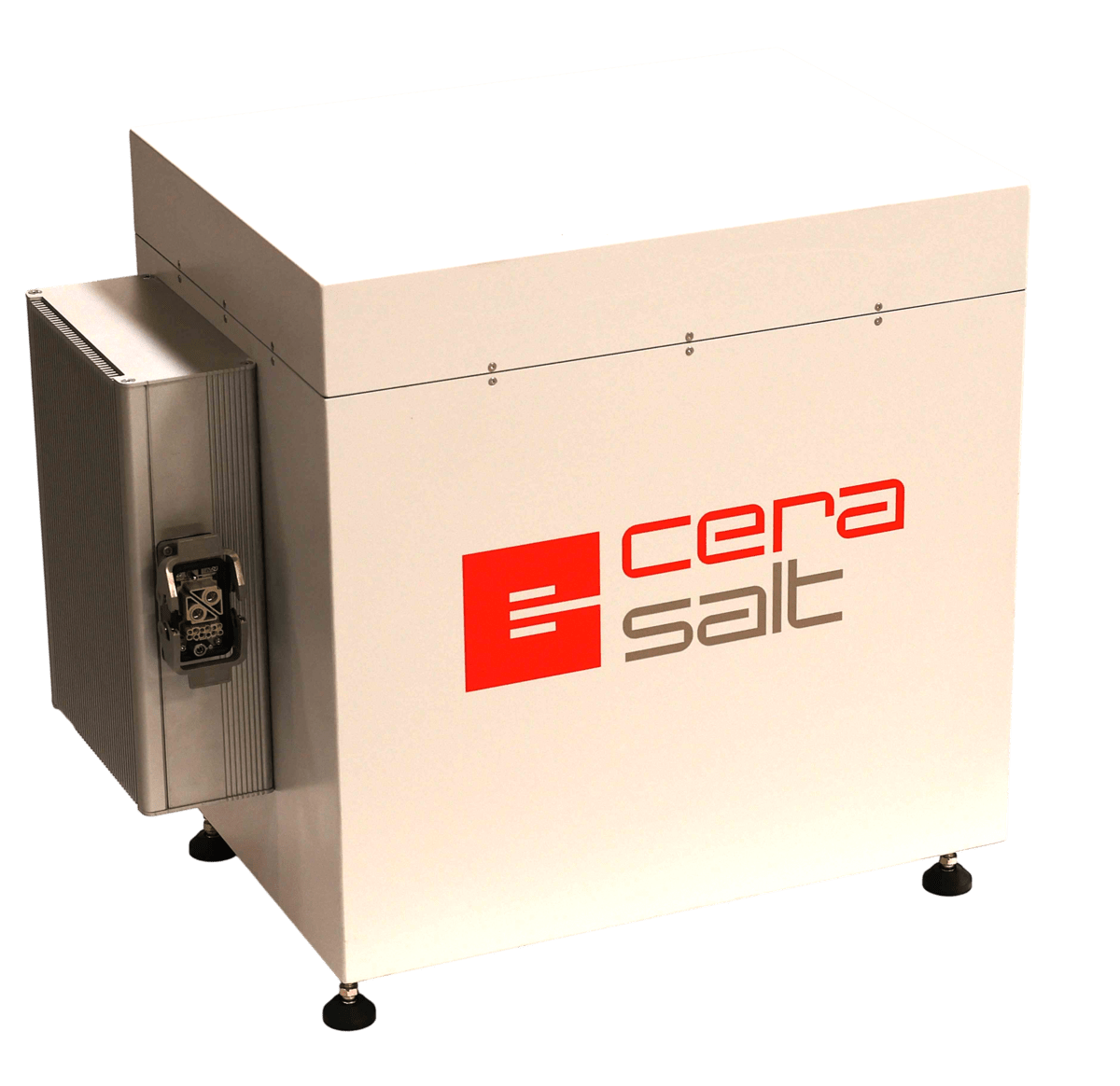
With the acquisition of this equipment, the factory will initially be expanded to a capacity of 0.1 GWh (= 300,000 cells). What is special about this industrial concept is that the 0.1 GWh factory represents the industrial reference scale. For a subsequent 1 GWh factory, no further scale-up challenges exist, as the 1 GWh plant will consist of ten parallel 0.1 GWh lines.
This point was also very important to the EU, as the focus from the outset was on an industrial GWh scale. Therefore, the initial 0.1 GWh concept was significantly more demanding and took longer to complete. This work is now finished.
Users and Advantages of the CeraSalt Battery
We have also worked intensively with various users, who see a wide range of advantages of CeraSalt batteries compared with other technologies:
Geopolitical independence
No dependency on input materials from distant countries; salt (NaCl), iron (Fe), nickel (Ni), and ceramic materials can be sourced autonomously within Europe.
Non-flammability
CeraSalt batteries do not burn—particularly important for critical infrastructure. Lithium-ion/LFP batteries can self-ignite or ignite due to external impacts.
Recyclability
Ceramics and salt can be disposed of without difficulty; nickel and iron can be reused. Disposal of other technologies remains problematic or at least costly.
Temperature independence
Being a high-temperature battery (operating temperature 270-330°C), CeraSalt batteries operate independently from ambient temperatures, i.e. operation in very cold or very hot outdoor temperatures is unproblematic. Lithium batteries may lose capacity or be damaged, at high temperatures they also require cooling, reducing efficiency.
Longer service life
The capacity of CeraSalt batteries remains constant over many years, whereas lithium batteries degrade over time and lead-acid batteries usually have a significantly shorter service life.
Simple redundancy
If a single CeraSalt cell fails, the module continues to operate because the failed cell has low resistance. In other battery technologies, a cell failure causes the entire module to fail. For critical applications, this often requires 2N redundancy (a complete backup system), which is largely unnecessary with CeraSalt.
Maintenance-free operation
Especially advantageous for remote applications (e.g., oil platforms). Other technologies (NiCd, lead-acid) require regular maintenance or replacement.
Volumetric energy density and space requirements
Na/NiCl₂ achieves 80–100 Wh/l at system level, significantly higher than NiCd, VRLA, and especially redox-flow batteries (factor >10), reducing space requirements. Due to the easy stackability and no need of further additional equipment, an 800V DC system (120KWh) can already be provided combining three modules (American Fridge size). Higher stacks further increase the space efficiency (energy and power density per square meter).
PianoForte performance
CeraSalt batteries can deliver short-term high power peaks as well as long periods of low power draw without degradation—an uncommon combination in current battery technologies.
Thermoneutral operation / use of heat
Due to functional insulation and intrinsic heat management in the AICO cell, CeraSalt battery cells don’t need external energy to keep their operating temperature (discharging is an exothermal reaction). Being a high temperature battery, the waste heat of the CeraSalt battery can be harvested in order to use it for process-heat of industrial clients.
In Summary: Cost competitiveness (TCO) with other battery technologies, especially when:
(i) true redundancy is required, (ii) service life is considered, (iii) maintenance costs are significant or (iv) operation in hot countries is planned.
Stable sealing technology
CeraSalt batteries use an extremely dense and long-lasting cell seal produced by a proprietary process (Glass Compression Brazing), particularly relevant for frequent on/off cycles with heating and cooling.
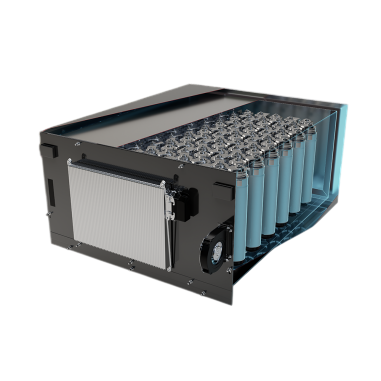
In addition to ceramics, SMC batteries use common salt, nickel and iron as their most important materials.
Both objectives have now been achieved. Compared with the historical design, the cell design has been optimized while retaining the fundamental cell chemistry—especially in terms of performance, reliability, and manufacturability. At the same time, the industrial production process has been defined and implemented. Today, we are already manufacturing battery cells in our factory, albeit in small quantities. Our next step is to scale this production further.
These advantages result in a very large market, especially in the area of critical infrastructure, hot regions, and in projects where geopolitical independence, sustainability, enhanced safety requirements, or variable performance profiles are important.
We have spoken with relevant users and encountered strong interest. Without excessive self-promotion, we can state that worldwide there is no other company that is as advanced as CeraSalt in industrial-scale SMC Cell Generation 4 technology.
September 2026
Team
Our team brings together battery technology, industrial manufacturing and market development to advance CeraSalt toward scalable stationary energy storage.

Dr. Holger Wampers
CSO, Managing Director
25 yrs ceramics & battery R&D. Mechanical Engineer (RWTH Aachen); PhD Ceramics. 18 yrs Alumina Systems (CEO).
Dr. Kai Sauerzapfe
Managing Director
13 yrs ceramics & battery R&D. Mechanical Engineer (RWTH Aachen); PhD Ceramics. 13 yrs Alumina Systems, R&D Head.

Dr. Roland Egerer
Managing Director, CEO
25+ yrs mid-market investments. Industrial Engineer (Karlsruhe); PhD Economics (St. Gallen). Finance, governance, corporate development.

Dott. Demetrio Baronetto
Head of Production
30+ yrs NaNiCl electrochemistry. Industrial Chemist (Milan). Former COO Horien / Fiamm/FZ Sonick.

Dr. Jens Willenbockel
Head of Business Development & Sales
20+ yrs battery industry & biz dev. Industrial Engineer (Darmstadt); PhD Economics (EBS). SMC patent holder.

Kerstin Zeies
CTO, Head Ceramics Development
10+ yrs Material science engineer (Koblenz University). With battery unit since day 1.

Helmut Fortunato
CFO, Head of Finance and Controlling
Business Administration (European Business School). 25+ years in mid-market investments.
Contact
For technical, commercial or partnership enquiries, please use the form below.